+86-18050089566(WhatsApp/wechat)


Time:2026-11-02 Views:0
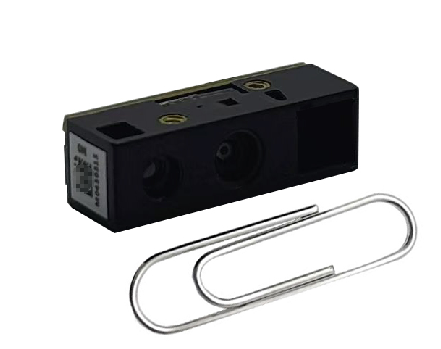
A DPM code is not a label that happens to sit on metal. It is a mark with no white background, no quiet zone and often less than one tenth of the contrast a printed symbol has, which is why a tablet that reads delivery labels perfectly can fail completely on the assembly line. The M1-R is built for that case: a 21 mm x 9 mm x 7.1 mm embedded 2D engine with a 640 x 480 CMOS imager, red LED illumination, a 3 mil resolution floor and a symbol-contrast floor of 10 %, drawing 160 mA at 3.3 V - small enough and cheap enough in power to live inside a rugged tablet, a handheld terminal or a compact reader head.
26 s: the M1-R reading codes marked directly on metal parts, held at a normal tablet working distance.
The clip above is the same one used on our miniature industrial module page, and the full parameter sheet is published on the M1-R product page. What follows is how those numbers translate into an integration decision.
A paper or polyester label gives a reader four free gifts: a bright uniform background, a quiet zone, a flat surface and a print grade you controlled. A direct part mark takes all four away.
The relevant standards are the symbology itself (ISO/IEC 16022 for Data Matrix), the print-quality method for two-dimensional symbols (ISO/IEC 15415) and the AIM DPM guideline, which grades marks on parts rather than on paper. If your customer specifies a DPM grade, that is the document they are quoting - and it is the number your reader has to hit, not the one on a label.
| Parameter | M1-R value (datasheet) |
| Image sensor | 640 x 480 CMOS |
| Illumination / focusing | Red LED |
| Minimum resolution (reading accuracy) | 3 mil or larger |
| Minimum symbol contrast | 10 % |
| Field of view | 43 degrees horizontal, 32 degrees vertical |
| Scanning angles | corner 360 degrees, elevation +/-55 degrees, deflection +/-55 degrees |
| Depth of field, Data Matrix 10 mil | 40 - 145 mm |
| Depth of field, QR Code 15 mil | 30 - 215 mm |
| Depth of field, Code 39 5 mil | 50 - 120 mm |
| Interfaces | USB, TTL-232 |
| Size | 21 mm x 9 mm x 7.1 mm |
| Weight | 1.2 g |
| Power | 3.3 VDC +/-5 %, 160 mA typical, 528 mW typical |
| Ambient light tolerance | 0 - 100,000 lux |
| Working / storage temperature | -20 to +55 C / -40 to +70 C |
| Working humidity | 5 % - 95 % (no condensation) |
Three rows in that table decide whether the part reads. Symbol contrast of 10 % is the low-contrast floor - it is what lets a peened mark on grey metal register at all. 3 mil minimum resolution is what lets a small Data Matrix on a small component fill enough of the 640 x 480 sensor to decode. And 0 - 100,000 lux ambient tolerance is what keeps the same tablet usable next to an open bay door at noon, which is where most "our scanner works on the bench" stories die.
The red LED matters twice: red illumination is well separated from most industrial surface colours, and the sensor and lens assembly is matched to it. That is also the reason to be careful about what you put in front of the module - see the window section below.
The M1-R uses a dual-CPU architecture: one core keeps the imager and the decode pipeline running, the other handles communication and housekeeping. In a tablet or PDA that means the decode cost never lands on the application processor, which is the difference between a device that reads continuously while the operator works and one that stutters because the UI is busy. It is the same design point behind the dual-CPU M1 and M2 engine line.
For a battery product the second-order effect is heat and runtime. At a typical 528 mW the engine is a small fraction of a rugged tablet display budget, and it runs from a plain 3.3 V rail with no boost stage - which usually means no new power-tree work for the mainboard designer.
The module is 21 x 9 x 7.1 mm and weighs 1.2 g, so the enclosure is rarely a size problem. The window is where builds go wrong, and the arithmetic comes straight from the published field of view of 43 degrees horizontal by 32 degrees vertical.
Those four points are general integration practice for embedded imagers, not M1-R-specific limits - the module numbers above are only the ones printed on its datasheet.
The engine exposes both. USB is the fastest path to a working prototype on an Android tablet: the module enumerates as a standard input device, so a text field receives the decoded string without a vendor driver, and the same cable works on a development board that ships with a trigger button and buzzer for bring-up. TTL-232 at logic level is what you move to when you own the mainboard, because it costs no USB host stack, no enumeration latency and two signal pins. Decide before the first PCB spin, not after: the connector, the power pin and the firmware trigger model are different in each case, and the accessory set listed on the datasheet covers both.
Two-dimensional coverage includes QR Code, Micro QR, Data Matrix, PDF417, Micro PDF417, Aztec, Maxicode, Hanxin Code, Dotcode and Composite. One-dimensional coverage runs through Code 128 (including ISBT, AIM and GS1 variants), EAN-13, EAN-8, UPC-A, UPC-E, ISBN, ISSN, Interleaved 2 of 5, Code 39, Code 93, Code 32, Codabar, Matrix 2 of 5, Industrial 2 of 5, ITF-25, MSI Plessey, GS1 DataBar and Febraban. The datasheet also lists passport OCR, so the same window can serve an identity check at a desk - the practical consequences of that are covered in the OCR passport verification scenario and in the dual-CPU QR scanner with passport reading.
If your line reads a Data Matrix on a moving conveyor rather than a stationary part, that is a different optical problem: see why a moving Data Matrix is a different problem.
Write the pass rate you require into the acceptance document before you test. A reader that hits 99 first-reads on your worst coupon is a better answer than a datasheet claim about somebody else's part.
Will it read a DPM code on shiny metal? That is the case the 10 % symbol-contrast floor and red LED illumination exist for, but a specular part can still beat any reader. Test your own coupons at your own angle before you commit.
What is the smallest symbol it handles? The published reading accuracy is 3 mil or larger; the Data Matrix 10 mil depth of field is 40 - 145 mm. Smaller marks need a shorter working distance and a lens you can verify.
Does it work on a phone or HMI screen? The datasheet graphic calls out on-screen barcodes behind protective film and at the lowest brightness level. Confirm on the actual display model you deploy.
How much power does it need? 3.3 VDC +/-5 %, about 160 mA and 528 mW typical, with no boost converter on the module itself.
Can it survive a cold store or an outdoor bay? Working range is -20 to +55 C and 5 % - 95 % humidity non-condensing; storage is -40 to +70 C. Condensation, not cold, is the failure mode to design against.
How is M1-R different from M1V2, M1W or M2? They are separate published variants of the family with their own housings and interface options - compare M1V2 and M1W on their product pages, and ask for the family datasheet before substituting one for another.
The M1-R product page carries the same parameter table and a datasheet request. If you are evaluating an engine for a tablet, PDA or kiosk build, the fastest way to answer the contrast question is to mark your own parts and read them - how to get a free scan engine or module sample explains what we send and what we need from you.

About

Products
Solutions
Support
News