+86-18050089566(WhatsApp/wechat)

Time:2026-10-19 Views:800
EDOO supplies a scan engine or barcode scanner module at no cost for evaluation once a written application has been reviewed. One email to chenzg@edoo-iot.com carries four things — your project background, the intended use, the model you are asking for, and your contact details — and engineering replies with an approval, a substitute model, or a reason. "Scan engine", "decoding module", "OEM scan engine" and the search-box phrasing "engine scan" all name the same part: the reading head that goes inside your device, without a handle or a stand attached to it.
In short:
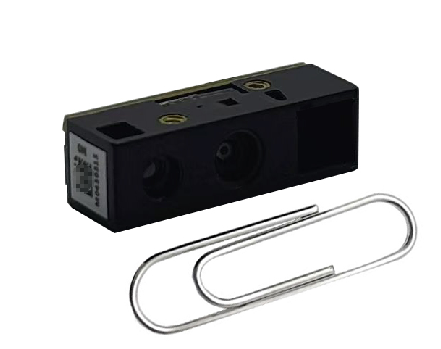
EDOO MF22 Embedded Barcode Scan Engine and its spec block lists the TTL, RS232, PS/2 and USB interfaces.Four patterns cover almost every "free barcode scanner module" offer a buyer will run into, and they are not the same transaction.
A maker's evaluation sample. The component manufacturer supplies a reading head so that your design can be proven against real labels in your own housing. This is the pattern EDOO uses, and it is the one that costs the supplier real units, which is why it runs through an engineering review rather than a checkout page.
A distributor demonstration stock. A reseller with warehouse inventory sometimes releases a demo unit from a marketing budget. Availability follows whatever the distributor happens to hold, and it rarely covers a device-integration interface such as TTL.
A first article folded into a tooling or engineering-change order. When a build needs a custom cable, a changed window or re-marked labels, the first physical article is often priced into that work rather than invoiced as a sample. Nothing is free; the cost moved to a different line.
A consumer giveaway. Finished handheld scanners given away with a service subscription, a device bundle or a competition are the most common result for the phrase "free barcode scanner" — and they are not components. A consumer unit with a fixed cable cannot be embedded in your kiosk.
Ask which of the four you are being offered. The answer decides whether the part reaching your bench can be built into the product you are shipping.
Before you apply, be certain which one you need, because the two solve different problems and the application reads very differently.
A scan engine / barcode reading module is the decode head: an optical window with an image sensor behind it, illumination to light the code, a decoder running the symbology work, and a data path out to a host. It arrives as a component with a footprint and a connector. Your mechanical design supplies the bezel, the sealing, the cable routing and the host driver. Pages in the scan engine range name the interfaces they print — USB, RS232, TTL, COM, PS/2 — and that list is the point you design around.
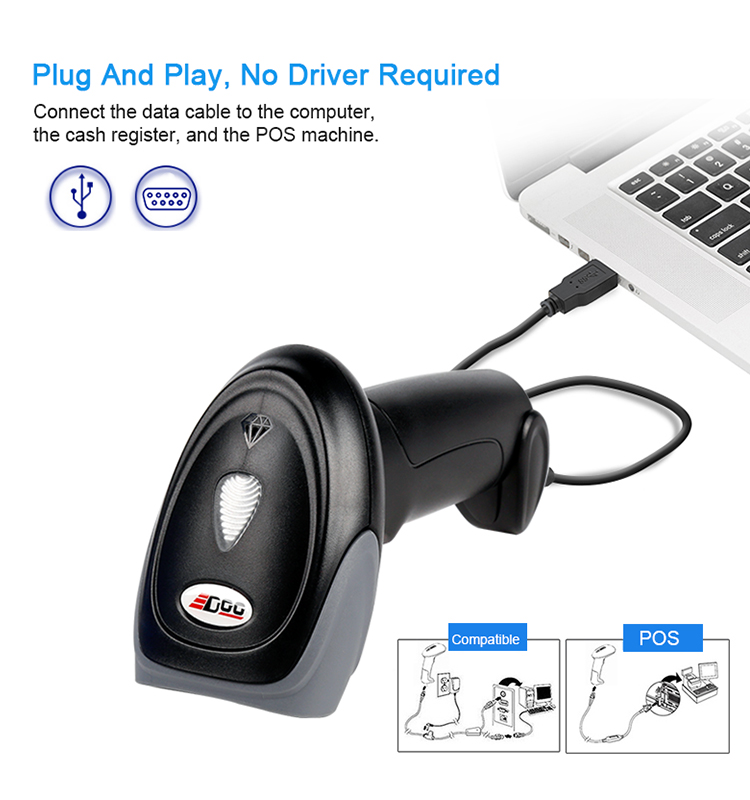
A finished scanner adds a grip or a base, a trigger, an audible or visual confirmation channel, and a cable you can plug into a running host. It is the right answer when the reading task sits on a counter; it is the wrong answer when the reading task sits inside a machine.
If you are replacing a scanner by embedding its decode head, or you are putting code reading into a kiosk, a turnstile, a vending machine, a tablet or a self-checkout lane, the component you want is a scan engine. Say so in the application, in those words.
Send all four in the first email. Each one answers a question the reviewer would otherwise have to ask, and every unanswered question is a day on your timeline.
What you are building, and what stage the build is at: concept proof, prototype and validation, a pilot run, or a replacement program for a part that is already shipping. Add who you are (company, role) and roughly what the program consumes per year, plus the date by which you need a reading result in your own hands. A reviewer sizing an evaluation budget reads stage and schedule first: a project that must decide this quarter is a different queue from one exploring options for a 2027 launch.
Where the module ends up and what it has to read. Be concrete:
fixed mount hands-free 2D reader for self-checkout, which is a hands-past-the-window design.Long Distance Barcode Scanner Module), whether light or dust leaks into the opening.Name the model and paste the link to its product page, so the reviewer is not guessing which of several similarly sized engines you meant. Choose from the table below; if you are migrating from another manufacturer's head, state the footprint you are replacing in the same terms the page uses — the E5 page, for instance, publishes a replace-a-5X80-form-factor position rather than a compatibility promise. If you genuinely do not know which model fits, say that and describe the use instead: an application that names the constraint gets a better answer than one that guesses the part.
Company and country, the named contact and their role, a direct email plus a phone or WhatsApp number, and the delivery address with a postal code and a named recipient. If you want the parcel to travel on your own courier account, give the account number in the first message. Then list the documents your engineers need beside the hardware — datasheet, interface notes, SDK — so both arrive together; the site's product documentation page is where published material is collected.
An inbound application goes to engineering, not to a sales queue that cannot say no. The reviewer matches the codes, the presentation mode, the reading distance and the host interface in your message against the model you asked for and against the range. Three outcomes come back, and all three are useful:
Nothing about this review is a credit check or a sales qualification call. It exists because an engine that does not match the build is scrap for both sides, and the reviewer is being asked to spend real units on your design.
The middle column is what each product page says about itself; it is the wording to reference in your email.
| Model | What its own page prints | Product page |
|---|---|---|
| ME22 | 1D 2D barcode scan engine | /product/49.html |
| MF22 | embedded 2D barcode scan engine, used for kiosks, parcel lockers and ticket checkers; its interface line reads TTL,RS232, PS/2, USB | /product/278.html |
| MF27 | embedded barcode scan engine, same integration family as MF22,for kiosks and high-speed reading | /product/279.html |
| M1-R | mini industrial dual-CPU barcode scan engine | /product/204.html |
| MF26 | fixed-mount 2D barcode scanner module for self-service kiosks, access gates and embedded equipment | /product/268.html |
| MF35 | fixed-mount 2D barcode scanner module for the same kiosk, gate and embedded-equipment family | /product/269.html |
| F46 | embedded 2D scan engine with USB and RS232 interfaces, flush mount | /product/277.html |
| MF31 | long distance barcode scanner module, page written around long-distance code reading in a parking lot | /product/118.html |
| E5 | small module for embedded devices, published as a replace for the 5X80 form factor | /product/122.html |
| MF61-M | fixed-mount hands-free 2D reader for supermarket and convenience-store self-checkout | /product/142.html |
| MF28-YG | fixed-mount reader for payment kiosks and access control with an NFC reader | /product/144.html |
| F43-MRZ | OCR passport and QR reading engine for kiosks over USB and RS232 | /product/213.html |
| M1 | page describes a miniature 2D module with a dual-CPU design; the page carries no short model code | /product/163.html |
| High-speed embedded 1D/2D module | page titles it for kiosks and high-speed reading | /product/209.html |
Two cautions about the table. The E5 row describes a form-factor position, not an endorsement or a compatibility guarantee from any other manufacturer. And the miniature dual-CPU page does not publish a compact model code, so apply for it by page link rather than by an invented name — the same advice covers any page in the range whose title reads as a description instead of a part number. Fixed-mount industrial readers and the fixed-mount scanner range sit outside this component family; ask for those separately and say what the conveyor or gate does.
| Check | Why the reviewer needs it | If you leave it out |
|---|---|---|
| Interface your host speaks | The data path is hardware and firmware, not a cable color | The approved engine cannot be talked to by your board |
| Code types and quality | Symbology set, damaged-label behavior and screen display differ by class | A part is approved that fails your worst label |
| Reading distance and angle | Window position and distance decide the optical class | Rework on the bezel after the sample arrives |
| Presentation mode | Aimed versus hands-free changes the whole head | The unit sits on the bench and never gets installed |
| Host software path | Driver, serial stream or keyboard wedge is a different integration | Your team's estimate turns out wrong |
| Certification scope | Radio, enclosure and marking work reopen test scope | A pilot stalls while documents are chased |
State plainly what a free evaluation unit does not do for you. It does not replace the qualification work on your product: your enclosure, your cable routing, your firmware and your conformity assessment remain yours. It also does not commit either side to an order — commercial terms for a production run are a separate conversation, and EDOO's published OEM and ODM program here states a quantity floor from 100 units, a 15-day sample lead time and 30 days for mass production, from a Shenzhen facility listed at 5000+ square meters under ISO9001 with BSCI social compliance, exporting to 60+ countries with CE, FCC and RoHS marks published on the site.
Can I really get a scan engine for free? Yes, through an evaluation application reviewed by engineering, and the free unit is a component released to prove your design. Approval is not automatic: the reviewer has to see a described project, a stated use, a requested model and a way to reach you.
What do I write in the email? Four things, in this order: project background (what you build, what stage, what schedule), intended use (host device, codes, distance, interface, environment), the model you want with its product-page link, and your contact details with a delivery address. Send it to chenzg@edoo-iot.com.
What if I do not know which module I need? Describe the application instead and ask for a recommendation. Naming the constraint — self-checkout lane, TTL to an embedded board, long distance at a parking gate, passport pages at a counter — lets engineering pick the model, and it is a normal outcome of the review that they pick a different one from the model you guessed.
Does a free sample include shipping or a datasheet? Both are confirmed in the reply, together with the quantity and the documents that travel with the unit. Put your courier account number and the documents your engineers need in the first email so the answer can cover them.
How long does the evaluation take? The review is engineering's, and the reply arrives with the model, quantity and shipping terms decided. If you have a hard date — a pilot build, a customer demonstration — put it in the background paragraph, because that is the line a reviewer schedules around.
To apply: email chenzg@edoo-iot.com with the subject Scan engine evaluation — <your project name> and the four sections above. The contact page carries the same route if you would rather use the form. This page describes the application process as EDOO runs it in October 2026; the model rows quote each product page's own wording, and every commercial figure is that company's published term to confirm at order time.
EDOO product datasheet · EDOO product datasheet · EDOO product datasheet · EDOO product datasheet · EDOO product datasheet · EDOO product datasheet · EDOO product datasheet · EDOO product datasheet · EDOO product datasheet · EDOO product datasheet · EDOO product datasheet · EDOO product datasheet · EDOO product datasheet · EDOO product datasheet · Barcode scan engines · Fixed mount barcode scanners · Product documentation and SDKs · ODM / OEM services · Contact EDOO
About

Products
Solutions
Support
News