+86-18050089566(WhatsApp/wechat)
+86-18050089566(WhatsApp/wechat)


Time:2026-09-10 Views:831
QR code scanning is essentially a combination of machine vision and decoding algorithms. Traditional solutions rely on conventional CV (image processing) technologies, which frequently fail to decode QR codes under conditions of reflection, contamination, deformation and low light. AI technology, especially edge-side lightweight deep learning, does not replace QR codes but reconstructs the image preprocessing capability of scanning devices. It greatly expands the application boundaries of QR codes and generates new functions, innovative scenarios and industrial changes. This article conducts an in-depth analysis from five dimensions: underlying algorithms, hardware and products, customized empowerment for Yidu scanning products, market pattern, as well as technical limitations and long-term trends.
1. Underlying Algorithm Level: Solving Core Pain Points of Traditional Scanning
1.1 Limitations of Traditional CV Scanning Technology
Traditional QR code recognition adopts fixed rules such as threshold segmentation, image binarization and edge extraction. With solidified logic and poor adaptability, it can only identify standard QR codes with clean surfaces and high contrast. It is extremely difficult to decode codes with surface damage, oil stains, strong light reflection, curved deformation, long-distance tiny size and motion blur. Manual adjustment of exposure, fill-in light and shooting angle is required for recognition, resulting in extremely limited application scenarios.
1.2 Core Technical Upgrades Brought by AI Algorithms
1) Intelligent Code Area Detection (Object Detection Model)
Based on lightweight YOLO series object detection models, the system can quickly and accurately locate QR code areas in complex and cluttered backgrounds. Even if the QR code occupies a small proportion of the frame or is mixed with sundries and stacked codes, it can automatically select effective code areas, completely replacing the inefficient traditional contour matching algorithm. Typical scenarios include stacked express parcels and disordered industrial parts pallets, where the device can automatically screen valid QR codes and eliminate invalid interference.
2) Full-dimensional Image Enhancement Technology
Leveraging deep learning-based image restoration, super-resolution reconstruction and reflection suppression algorithms, it realizes image optimization in complex scenarios:
• Intelligent defogging and anti-reflection: Precisely suppress highlight reflection on metal workpieces and transparent plastic packages to restore blocked QR code information;
• Super-resolution pixel reconstruction: Repair and enlarge blurred tiny QR codes at long distances to improve clarity and meet long-distance scanning requirements;
• Damaged image restoration: Intelligently supplement missing areas of QR codes with scratches and slight contamination to improve fault tolerance.
Industrial Value: Industrial DPM laser engraved codes on metal parts are usually accompanied by oxidation, scratches and blurriness, leading to extremely low recognition rates of traditional scanners. AI image enhancement significantly improves the recognition stability of industrial non-standard codes.
3) Adaptive Perspective and Distortion Correction
Deep learning can independently estimate perspective angles and surface deformation parameters without fixed geometric correction algorithms, adapting to distorted QR codes caused by inclined mobile phone shooting, cylindrical surfaces and irregular workpieces, solving the poor angle adaptability problem of traditional algorithms.
Core Feature: AI only undertakes front-end image optimization, restoration and correction. The final decoding still follows universal QR and DM coding standards without changing the basic specifications of QR codes, merely improving the pre-processing capability for complex scenarios.
4) Edge Lightweight Deployment with Low Latency and High Security
Through model pruning and quantization compression, large deep learning models are optimized into lightweight models of several MB to tens of MB, which can be directly deployed on local NPU and MCU chips of scanning devices. No cloud image upload is required, realizing millisecond-level image processing and decoding, fully meeting the industrial requirements of high-speed production line operation, local data closed-loop, low latency and high data security.
2. Innovation and Changes in Hardware and Product Form
1) Reducing Dependence on High-end Optical Hardware and Controlling Costs
Traditional scanning in complex scenarios relies heavily on high-cost hardware such as polarized lenses, high-power fill lights and high-resolution global shutter cameras. AI algorithms make up for partial optical hardware defects through software optimization, enabling mid-range conventional hardware devices to adapt to complex working conditions such as reflection, blurriness and low light, greatly reducing the overall cost and application threshold of industrial scanners. However, professional optical hardware and global shutter sensors are still irreplaceable in extreme scenarios such as ultra-high-speed production lines and micron-level tiny DPM codes. AI serves as a software supplement rather than a hardware substitute.
2) Multi-functional Integration: Upgrading Scanners to Edge Vision Terminals
Equipped with AI computing power, scanners completely get rid of the single decoding function and evolve into lightweight industrial edge vision terminals with multiple functions:
• Scanning + OCR character recognition: Synchronously identify QR code information and part batch numbers, serial numbers and production text parameters;
• Scanning + defect detection: Detect workpiece scratches, material shortages, size deviations and other appearance defects while recognizing QR codes;
• Multi-code parallel recognition: Identify multiple 1D and 2D codes in a single frame, and automatically output the coordinates and data of each code to adapt to batch sorting scenarios.
This integrated mode has become the core iteration direction of industrial scanning products.
3) Comprehensive Performance Upgrade of Embedded Modules
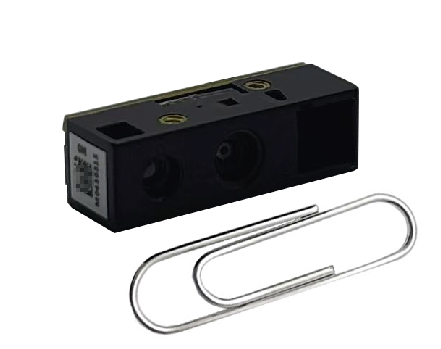
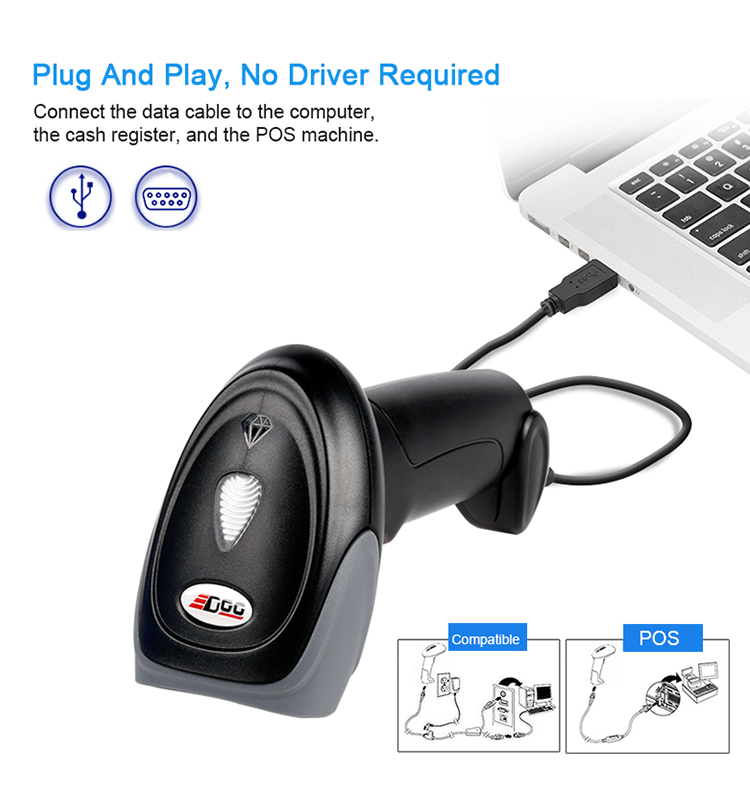
Small embedded scanning modules built in gates, self-service terminals and industrial PDAs have greatly improved their capabilities in outdoor strong light, long-distance and screen reflection scanning with lightweight AI algorithms. Conventional consumer-grade scanning guns are also gradually equipped with basic AI image enhancement functions, comprehensively improving user scanning experience.
3. Special Empowerment of AI for Yidu Scanning Technology and Products
1) Driving Rapid Algorithm Iteration and Improving Product Performance at Low Cost
In the traditional CV algorithm era, the performance optimization of Yidu scanning products relied heavily on manual parameter adjustment and offline scenario testing, with long iteration cycles, single optimization dimensions and high upgrade costs. With the introduction of AI data-driven mode, massive real-scene samples are used for model training to solve common industry pain points such as outdoor overexposure, indoor backlight black screen, code blurriness, surface deformation and slight contamination. It quickly realizes algorithm upgrades including intelligent strong light suppression, image reconstruction, blur restoration and adaptive exposure correction. Without large-scale hardware replacement, continuous improvement of full-scene recognition success rate is achieved only through firmware iteration, shortening product upgrade cycles and quickly matching the performance of first-tier brands with low-cost and high-efficiency optimization.
2) Building Product Differentiation and Escaping Low-end Homogeneous Price Competition
Low-end scanning products in the industry have highly homogeneous functions and only basic decoding capabilities, falling into long-term low-price involution. Leveraging AI technology, Yidu scanning builds exclusive differentiated competitiveness. For segmented scenarios such as supermarket strong-light cashiers, high-reflection express waybills, outdoor gate scanning and industrial slightly contaminated workpieces, it develops an AI adaptive scenario recognition system. The device can automatically identify ambient light, code status and working conditions, and intelligently switch corresponding AI optimization models. It enables mid and low-end scanning modules and guns to achieve high-end-level recognition effects in complex scenarios, escaping the red ocean of pure hardware and price competition and building core product barriers through AI algorithm capabilities.
3) Building a Sustainably Upgradable Technical Ecosystem to Extend Product Lifecycle Value
AI models support continuous iterative training and remote OTA online upgrades. Yidu can continuously optimize model accuracy and algorithm capabilities based on real user scenario data, enabling hardware devices to become "smarter with use" and completely changing the defect of fixed traditional devices without subsequent upgrade space. Meanwhile, relying on the AI tool chain, it provides customers with supporting technical services such as rapid development, scenario testing and algorithm adaptation, improving the product ecosystem, customer stickiness and additional product value.
4. Changes in Industry Market Pattern
1) Accelerating Domestic Substitution and Narrowing Sino-foreign Technical Gaps
The barriers of traditional high-end industrial scanning lie in high-end optical hardware and core decoding algorithms, which have long been monopolized by overseas brands. At present, open-source CV frameworks and lightweight AI models greatly reduce algorithm R&D thresholds. Domestic manufacturers can quickly make up for algorithm shortcomings with AI technology, continuously occupying overseas market shares in mid-to-high-end DPM industrial scanning and complex scenario recognition, and accelerating the domestic substitution process of the industry.
2) Intensified Market Stratification and Obvious Track Differentiation
• Low-end consumer scanning guns: Limited AI empowerment and simple application scenarios, remaining in the red ocean of price competition;
• Mid-to-high-end industrial intelligent scanners: AI adaptive recognition and multi-functional integration are core premium selling points, with rapid market growth and high gross profit, becoming the core growth track of the industry.
3) Cross-border Competitors Enter the Market and Upgrade Industry Competition
Traditional AI vision enterprises cross-border into the scanning equipment track. Relying on native AI algorithm advantages, they are compatible with QR code recognition functions, breaking the inherent market pattern of traditional scanning manufacturers and promoting the industry to transform from hardware competition to comprehensive competition of "hardware + algorithm + scenario solutions".
5. Technical Limitations, Application Risks and Long-term Development Trends
5.1 Technical Limitations
1. AI can only optimize and restore existing image information and cannot supplement missing information out of nothing. If the QR code is severely damaged or core modules are completely missing, AI cannot complete decoding;
2. AI computing deployment increases device power consumption and hardware costs, making full AI deployment impossible for extremely low-end scanning products with strict cost limits;
3. AI models have generalization limitations. The recognition effect will decline significantly in niche scenarios beyond training sets such as special stains, extreme temperature and ultra-strong backlight, requiring targeted fine-tuning.
5.2 Impacts on Security and Anti-counterfeiting
Ordinary QR codes have inherent defects of being replicable, screenshotable and forgeable. AI only improves recognition efficiency and stability but cannot fundamentally solve the anti-counterfeiting problem of QR codes. The current emerging industry direction is the integration of AI with invisible codes, dot matrix anti-counterfeiting codes and carrier texture recognition technology. AI real-timely detects subtle textures and features of code carriers to intelligently identify fake QR codes from screenshots and copies, which is widely applied in bill verification and high-end commodity anti-counterfeiting scenarios.
5.3 Long-term Industry Development Trends
1. With the in-depth integration of AI and QR code scanning technology, AI will no longer be an optional value-added function but a standard configuration for mid-to-high-end scanning devices;
2. Scanning devices will evolve from single data collection tools to factory edge AI vision terminals integrating QR code recognition, OCR character recognition, quality inspection and target positioning, becoming the core data collection entrance for intelligent manufacturing;
3. Multi-modal recognition integration becomes mainstream. AI vision scanning is deeply combined with RFID and NFC technology. Terminals can intelligently judge scenarios through AI and automatically switch to the optimal recognition method to adapt to full-scene asset management and traceability requirements;
4. QR code technology will not be replaced. Its core advantages of standardization, low cost, passive power-free and high popularity are irreplaceable. AI only continuously expands its application scope, and QR codes will coexist and complement with pure AI object recognition technology in the long run.
6. Summary
AI technology does not subvert the underlying principle of QR code scanning, but comprehensively makes up for the technical shortcomings of traditional machine vision scanning. It upgrades QR code recognition from only adapting to clean standard codes to stable recognition in complex industrial and commercial working conditions such as oil stains, reflection, deformation, blurriness and long distances. The biggest industrial change is that scanning devices have completely got rid of the positioning of single decoding tools and evolved into multi-functional integrated edge AI vision terminals, greatly promoting domestic substitution in high-end scenarios such as industrial DPM traceability, intelligent manufacturing digitalization and medical device UDI traceability. Meanwhile, AI technology helps Yidu scanning realize rapid algorithm iteration, product differentiation breakthrough and technical ecosystem upgrading. However, limited by physical imaging rules, cost and power consumption, AI cannot solve the core defects of severe QR code damage and inherent forgibility, leaving continuous space for technical optimization.

About

Products
Solutions
Support
News