+86-18050089566(WhatsApp/wechat)
+86-18050089566(WhatsApp/wechat)


Time:2026-05-09 Views:936
I. Core Characteristics of Application Scenarios
Self-service machines and access control devices share the same usage logic: users hold a QR code and take the initiative to approach the code reader to complete recognition.
The entire process is fully operated by users independently. The fluency and ease of scanning directly determine the user experience, and also directly affect the reputation and quality of the entire equipment. Therefore, the adaptability of the QR code module is a core and key component of such equipment.
II. Four Core Selection Requirements
1. Large Field of View
The diagonal field of view is required to reach 83° or more, with a large coverage of the reading window. Users do not need to deliberately straighten or accurately aim; they can read the code by approaching it casually.
2. Excellent Motion Tolerance
Users holding a QR code approach the reader in a dynamic process. The module must have excellent motion tolerance, supporting scanning while moving and dynamic fast recognition without pausing or standing still, which is suitable for the public's habit of scanning codes casually.
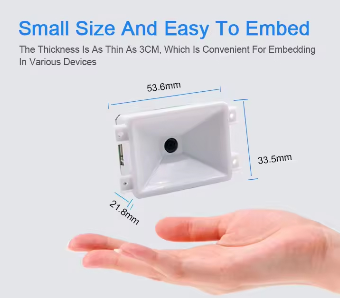
3. Small Module Volume
Especially for access control face recognition machines, ultra-thin access control terminals, and small self-service machines, the internal structure is compact. The module should be miniaturized, occupying less installation space, and reducing the difficulty of equipment structural design and overall machine stacking.
4. Specialized Strong Light Code Reading Algorithm
Devices are often installed in outdoor, open-air, or direct sunlight environments. For outdoor or semi-outdoor designs, a professional strong light anti-interference code reading algorithm must be equipped to effectively suppress sunlight overexposure and screen reflection interference, ensuring stable recognition of barcodes and QR codes even under direct strong light.
5. Good Compatibility with Code Materials
It has good compatibility with code materials, supporting codes of different background colors and screen codes. After all, in many scenarios, it is necessary to read both physical barcodes and screen barcodes.
III. For example
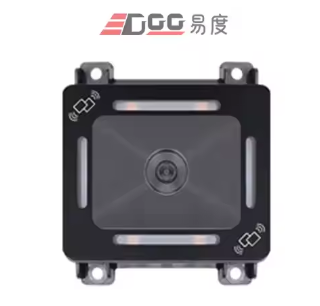
1. MF28 2.MF20
ABOUT US

PRODUCT
Solution
SERVICES
NEWS