+86-18050089566(WhatsApp/wechat)
+86-18050089566(WhatsApp/wechat)


Time:2026-05-27 Views:854
Android industrial PDAs serve as core data collection terminals across warehousing & logistics, field operations, manufacturing, retail inventory and other industries. The performance of handheld devices directly affects the overall working efficiency of frontline employees. However, the current market features various PDA models with uneven configurations, making it difficult for most purchasers to select the most suitable terminal for specific business scenarios.
Combined with real industry pain points, this guide formulates standardized selection criteria covering scenario-based indicators, universal specifications, expandable functions, brand ranking, budget allocation and purchasing traps, helping enterprises make proper decisions and avoid common selection mistakes.
I. Core Selection Principles
Over-specifying hardware parameters is not recommended. The optimal selection should follow the principles of scenario priority, customized core functions, reliable basic specifications and complete accessory ecosystem. Since different working scenarios have distinct operational requirements, barcode decoding capability, environmental adaptability, special data collection functions and expandability shall be regarded as primary evaluation standards, while performance, protection level and battery life act as auxiliary references.
II. Mandatory Specifications for Four Typical Application Scenarios
1. Warehousing & Logistics: Focus on Barcode Decoding Performance
Typical applications include incoming/outgoing inventory, cargo sorting, high-level shelf access and parcel counting. Devices for this scenario require long-distance decoding compatibility and excellent recognition for defective barcodes to support high-intensity continuous scanning tasks.
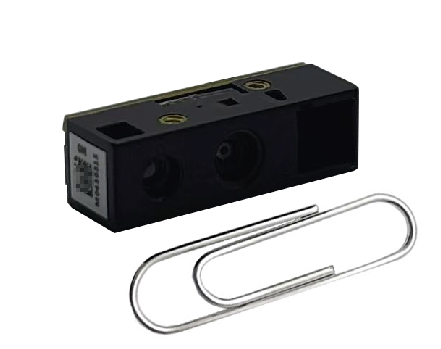
• Scanning Engine: Adopt professional hardware 1D&2D integrated scanning modules instead of camera-based soft decoding solutions. Honeywell and Zebra industrial decoders are highly recommended.
• Decoding Depth & Performance: The standard decoding depth ranges from 0.1m to 0.6m; high-shelf dedicated models support a working distance over 12 meters for high rack scanning without climbing. The terminal can accurately identify damaged, wrinkled, distorted and reflective barcodes with a damage rate below 30% within milliseconds.
• Expandable Accessories: Support hot-swap replaceable batteries to guarantee non-stop operation for two-shift or three-shift working modes. Reserved dedicated interfaces for pistol grip scanners to reduce hand fatigue during long-hour operations.
• Network Configuration: Equipped with dual-band WiFi 6 to eliminate blind signal areas and prevent disconnection during frequent roaming in large-scale warehouses.
2. Field Operation: Focus on Ambient Light Adaptability
Covering express delivery, outdoor inspection, cold-chain transportation and municipal engineering, field scenarios are featured with unpredictable working conditions such as strong sunlight, backlight, low temperature, rain and dust. High requirements are put forward for screen visibility and environmental adaptability.
• Light Adaptation: Built-in AI auto-exposure algorithm to adapt to ambient light ranging from 10lux to 100,000lux. The system automatically adjusts fill light intensity and imaging parameters to solve scanning failures under direct strong sunlight and backlight conditions.
• Screen Parameters: Adopt high-brightness IPS panels with brightness no less than 600 nits for clear visibility under direct sunlight. Support glove touch and wet-hand operation to adapt to complex outdoor environments.
• Protection Grade: IP68 dustproof and waterproof rating as the basic standard; certified with MIL-STD-810H military standard, surviving 1.5-meter multi-sided free drops onto concrete.
• Temperature Adaptability: Standard models work steadily from -10℃ to 55℃; cold-chain optimized versions adopt anti-fog lens design, adapting to extreme temperatures ranging from -30℃ to 50℃.
3. Manufacturing & Equipment Inspection: Focus on DPM Code Recognition
Industrial PDAs are widely used for parts quality inspection, production line monitoring and chemical equipment maintenance. Most identification targets are laser-etched, engraved or dot-peened DPM codes on metal and plastic surfaces, which are characterized by strong reflection, tiny size and low contrast.
• Dedicated Decoding Engine: Equipped with exclusive DPM scanning engine that supports 3mil ultra-fine barcode recognition, fully compatible with laser etching, mechanical dot peening and surface engraving identifiers.
• Optimized Optical Design: Equipped with red, blue and white adaptive fill lights. The terminal switches light sources intelligently according to material features to suppress metal reflection and optimize imaging for curved and irregular parts.
• Humanized Operation: Physical button layout enables blind operation with labor protection gloves. Explosion-proof versions are optional for chemical and oil & gas workshops.
• Network Optimization: Optimized WiFi roaming protocol ensures zero lag and zero packet loss during cross-workshop mobile operations.
4. Retail & Asset Inventory: Focus on UHF-RFID Bulk Reading
Ideal for clothing retail, supermarket commodity management and fixed asset counting. Different from traditional single barcode scanners, RFID-enabled PDAs prioritize batch reading and long-distance identification to drastically cut down inventory time.
• RFID Module: Adopt high-end Impinj E-series UHF reading & writing chips with stable performance; the tag reading speed reaches over 300 tags per second to realize one-time batch identification for shelf or boxed goods.
• Reading Range: The effective working distance covers 5 to 10 meters, meeting the inventory demands of large-area shelves.
• Modular Expansion: Support detachable dedicated RFID pistol grips for improved inventory efficiency; the grip comes with an independent battery to reduce host power consumption and can be removed for daily barcode-only tasks.
• Dual Backup Solution: Integrated 1D&2D barcode scanning function as a backup data collection method when RFID recognition fails.
III. Universal Hardware Specifications (2026 Industry Standard)
3.1 System & Hardware Performance
• Operating System: Android 12 ~ Android 14 is recommended for superior compatibility and security. Manufacturers shall provide no less than 2 years of system updates and security patches. Android 10 or older versions are not allowed for commercial procurement.
• Memory & Storage: Entry-level: 3GB+32GB; mainstream commercial configuration: 4GB+64GB (the most cost-effective option); heavy-duty version: 6GB+128GB for multi-task operation. 6GB or above RAM is strongly suggested for industrial long-term use.
• Processor: Qualcomm QCM industrial series and dedicated MediaTek industrial chips with a main frequency of 1.8GHz or higher. Compared with consumer-grade chips, industrial processors feature stronger stability and high-temperature resistance.
3.2 Battery & Endurance
• Battery Specification: The rated capacity shall not be lower than 5,000mAh. Hot-swap replaceable batteries are preferred to realize battery replacement without shutting down the device.
• Endurance Standard: Support 8~12 hours of continuous scanning under daily working conditions and over 3 days of standby time to satisfy full-day uninterrupted tasks.
• Charging Method: Standard Type-C fast charging port; 30-minute quick charge supports 4-hour continuous work. Dedicated charging cradles are optional for centralized charging of multiple devices.
3.3 Communication & Expandable Interfaces
• Full-network Communication: 4G full-network access as standard, optional 5G version for outdoor field work; equipped with dual-band WiFi 6, Bluetooth 5.2 and GPS+Beidou dual-mode positioning. Global multi-band communication is recommended for overseas business deployment.
• Functional Interfaces: NFC function is configurable for advanced business scenarios such as identity verification and anti-counterfeiting management.
• Accessory Ecosystem: Reliable suppliers shall provide complete official accessories, including scanning grips, spare batteries, charging cradles, anti-drop cases and hand straps.
IV. Product Recommendations
To accommodate diverse operational habits and business demands covering warehousing, retail inventory and industrial data collection, we have selected two high-performance Android handheld terminals for your options:
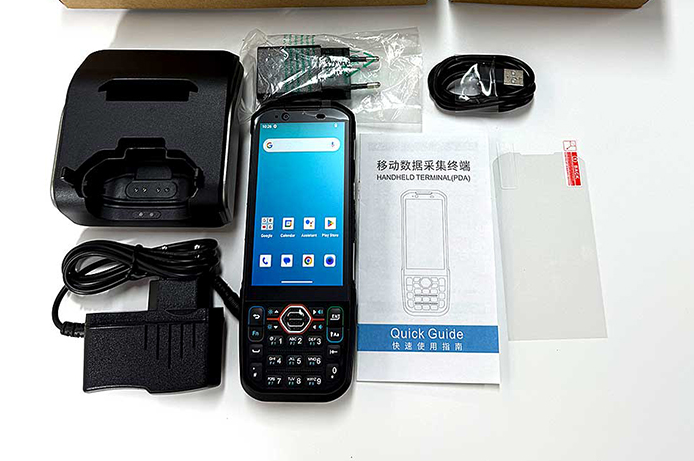
4.1 EDOO M73 | Keyboard Android Industrial PDA
The EDOO M73 is a keyboard-equipped rugged handheld terminal designed for high-frequency data entry scenarios. It balances efficient physical operation and industrial-grade protection, becoming an ideal terminal for inventory counting and express sorting.
Core Advantages
• Optimized Physical Keyboard: Custom physical buttons support blind operation, greatly improving the efficiency of barcode scanning and manual data entry, perfectly suitable for long-hour high-intensity assignments.
• Premium Hardware Performance: Powered by MT6769 octa-core 64-bit 2.0GHz industrial processor, matched with 6GB+64GB large memory and Android 13 OS, delivering fluent multi-task processing capability.
• Full-range Connectivity: Support dual-band WiFi, 4G LTE and Bluetooth 5.0; compatible with GPS, Galileo, GLONASS and Beidou multi-mode positioning to locate working sites accurately.
• Hot-swap Battery System: Adopt hot-swappable battery design to realize instant battery replacement without powering off, ensuring 7*24-hour non-stop commercial operation.
Key Technical Specifications
Item | Specification |
Operating System | Android 13 |
Processor | MT6769 Octa-core 64-bit, 2.0GHz |
Memory & Storage | 6GB RAM + 64GB ROM |
Display | 4.2-inch IPS Touch Screen |
Dimension & Weight | 162mm × 64.8mm × 25.9mm, <300g |
Communication | 2.4G/5G Dual-band WiFi, 4G LTE, Bluetooth 5.0+BLE |
Positioning | GPS / Galileo / GLONASS / Beidou |
Battery | 5200mAh Hot-swappable Battery |
| |
Application Scenarios
Retail stock counting, express & logistics sorting, warehouse inbound & outbound management, production line data acquisition and other industrial scenarios.
4.2 EDOO M93 | Full-touch Screen Android Industrial PDA
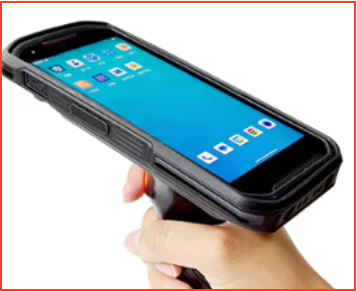
Equipped with a 5.5-inch high-definition full-touch screen, the EDOO M93 integrates comprehensive data collection functions and delivers superior visual interaction, adapting to complex multi-industry business workflows.
Core Advantages
• Immersive Large-screen Experience: 5.5-inch IPS display with 720×1440 resolution expands the viewing area, supporting sensitive multi-point touch to simplify operations for complex business interfaces.
• All-in-one Data Collection: Built-in high-performance 1D&2D scanning engine, equipped with native NFC and RFID reading functions to meet diversified collection needs in retail, logistics and medical industries.
• Long-lasting Endurance: 5200mAh detachable polymer battery with hot-swap support. The device offers over 350 hours of standby time and more than 12 hours of continuous working time for all-day field tasks.
• Industrial-grade Durability: Professional waterproof and dustproof structure for harsh working environments; matched with 95dB high-volume speaker and dual noise-canceling microphones to ensure clear voice communication in noisy areas.
Key Technical Specifications
Item | Specification |
Operating System | Android 13 |
Processor | MT6769 Octa-core 64-bit, 2.0GHz |
Memory & Storage | 6GB RAM + 64GB DDR4 ROM |
Display | 5.5-inch IPS Screen, 720×1440 Resolution |
Dimension & Weight | 166mm × 74.8mm × 20.4mm, <300g |
Battery | 5200mAh Hot-swappable Detachable Battery, 12h+ Working Time |
Data Collection | Full-range 1D/2D Barcode Scan, NFC & RFID Reading |
Communication | 2.4G/5G Dual-band WiFi, 4G LTE, Bluetooth 5.0, Multi-mode Positioning |
Application Scenarios
Retail checkout & member management, end-point express delivery, general warehouse management, apparel inventory, medical data collection, municipal facility inspection and other commercial & industrial scenarios.
V. Common Purchasing Traps & Notes
• Avoid Modified Consumer Phones: Ultra-low-cost handheld terminals below the industrial mainstream price are usually refitted from consumer smartphones without professional hardware scanning engines. Poor protection and unstable battery life lead to high failure rates under industrial working conditions.
• Reject No-brand Products: Do not purchase products from suppliers without official websites, nationwide after-sales outlets and formal product documents. No-brand devices cannot provide effective maintenance and replacement accessories.
• Distinguish Hardware Scanner & Camera Decoder: Products that only highlight high-resolution cameras without marking specific scanning engine models adopt camera-based soft decoding, which cannot identify damaged, distorted and reflective barcodes stably.
• Verify Actual Performance Before Purchase: Request scenario-based test videos from suppliers to verify core functions including defective barcode recognition, DPM decoding, strong-light scanning and RFID batch reading.
• Confirm After-sales Terms: Clarify warranty period, free maintenance scope, after-sales response time, spare device policy and official accessory pricing before signing procurement contracts.
VI. Standard Purchasing Decision Process
1. Scenario Positioning: Confirm actual working environments and define core demands (long-distance defective scanning, sunlight adaptive recognition, DPM decoding or UHF-RFID batch inventory).
2. Specification Screening: On the premise of matching core functions, select qualified terminals that meet basic access standards: Android 12 or above, 4GB+64GB memory, IP65+ protection grade and replaceable battery.
3. Performance Verification: Conduct on-site testing to check whether the device is compatible with the barcodes and tags used in your daily business.
4. Business Confirmation: Finalize warranty terms, accessory lists, unit price and delivery cycle to complete the procurement process.
About

Products
Solutions
Support
News