+86-18050089566(WhatsApp/wechat)


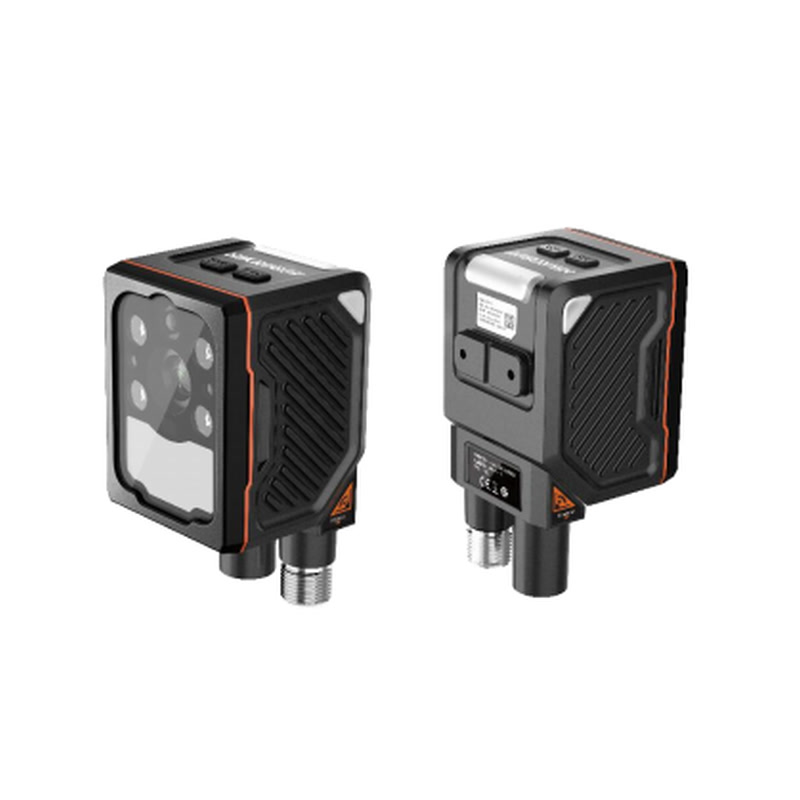
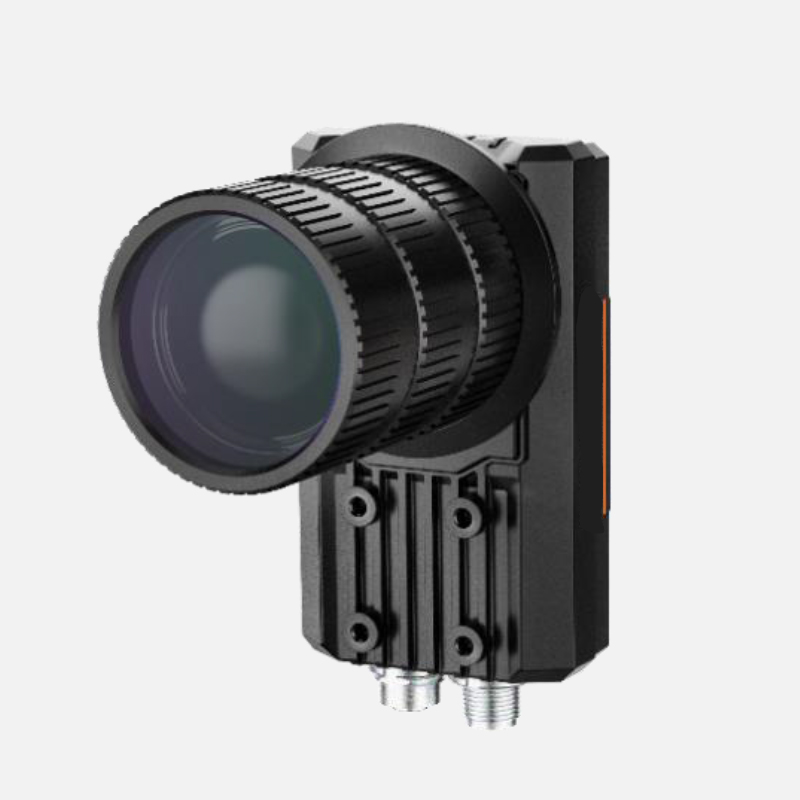
The EDOO EDX-3009 is a 5 MP industrial code reader that combines image acquisition, code recognition and output in one IP67 housing. It reads 1D and 2D codes at up to 90 codes per second and processes the image with a built-in deep learning algorithm, so poorly printed, small or damaged symbols are still recognised. Choose M12-mount mechanical focus when the working distance is fixed and you want the lowest element size, or a D14 liquid-lens model with ToF when the distance changes between products and the reader has to refocus on its own.
Ordering model: 8 mm mechanical: EDX-3009-X08M | 12 mm mechanical: EDX-3009-X12M | 16 mm mechanical: EDX-3009-X16M | 25 mm mechanical: EDX-3009-X25M | 8 mm liquid lens: EDX-3009L-X08M | 12 mm liquid lens: EDX-3009L-X12M | 16 mm liquid lens: EDX-3009L-X16M


The EDX-3009 is a 5 megapixel fixed-mount industrial code reader. With image acquisition, code recognition and output in one body, it reads different types of 1D and 2D code at up to 90 codes per second and processes them with a built-in deep learning algorithm, which is what keeps it reading codes that a conventional decoder gives up on - low contrast, small modules, over-printing on foam labels or direct-part-marked symbols on metal.
It is offered in two focus families. The mechanical-focus models (8, 12, 16 and 25 mm M12 lenses) are set once during commissioning and give the finest element size at a fixed distance. The liquid-lens models (8L, 12L and 16L, D14 mount) combine a liquid lens with a ToF sensor, so the reader performs fast image settings and real-time focusing when the working distance changes from job to job. Both families share the same sensor, the same 12-pin M12 I/O and the same IP67 metal housing.
| Performance | |
| Model | EDX-3009 (mechanical focus) / EDX-3009L (liquid lens focus) |
| Symbologies (1D) | Code 39, Code 93, Code 128 (incl. GS1-128), CodaBar, EAN 8, EAN 13, ITF14, ITF25, UPCA, UPCE, Matrix 25, MSI, Code 11, Industrial 2of5, China Post, Pharmacode (one/two-track) |
| Symbologies (2D) | QR Code (incl. GS1-QR), Data Matrix (incl. GS1-DM), MicroQR, AZTEC, HanXin, Maxi Code |
| Stacked codes | PDF 417, MicroPDF417 |
| Max. frame rate | 60 fps |
| Max. reading speed | 90 codes/sec |
| Sensor type | CMOS, global shutter |
| Sensor size | 1/1.45" |
| Resolution | 2432 × 2048 |
| Pixel size | 3.45 µm × 3.45 µm |
| Exposure time | 6 µs to 30000 µs |
| Gain | 0 dB to 24 dB |
| Mono/color | Mono |
| Communication | |
| Data interface | Fast Ethernet (100 Mbit/s) |
| Protocols | SmartSDK, TCP Client, TCP Server, Serial, FTP, Profinet, MELSEC/SLMP, Ethernet/IP, ModBus, Fins, UDP |
| Electrical | |
| Power supply | 24 VDC |
| Power consumption | Average 6.2 W @ 24 VDC, maximum 16.8 W @ 24 VDC with the light source enabled |
| Digital I/O | 12-pin M12 connector carrying power and I/O: 3 opto-isolated inputs (LineIn 0/1/2), 3 opto-isolated outputs (LineOut 3/4/5) and 1 RS-232. The device can also be triggered by pressing the top button. |
| Optics | |
| Focal length | Mechanical focus: 8 mm / 12 mm / 16 mm / 25 mm. Liquid lens: 8 mm / 12 mm / 16 mm. |
| Lens mount | Mechanical focus: M12-mount. Liquid lens: D14-mount. |
| Lens cap | Transparent + polarized + diffused lens cap |
| Light source | Red point light source + white diffused light source. White, blue, IR or UV point light source optional. |
| Aiming system | Orange LED |
| Indicator | Device body indicator, reading result indicator |
| Mechanical | |
| Shell material | Metal |
| Dimension | Straight angle: 80.1 mm × 43 mm × 44.3 mm (3.2" × 1.7" × 1.7"). Right angle: 58.5 mm × 43 mm × 65.4 mm (2.3" × 1.7" × 2.6"). |
| Weight | Approx. 195 g (0.4 lb.) |
| Ingress protection | IP67 (under proper installation of the waterproof lens cap) |
| Environment | |
| Working temperature | Mechanical focus models: 0 °C to 50 °C (32 °F to 122 °F). Liquid lens models: 0 °C to 45 °C (32 °F to 113 °F). |
| Storage temperature | –30 °C to 70 °C (–22 °F to 158 °F) |
| Humidity | 20% RH to 95% RH (no condensation) |
| Vibration resistance | Device only: 10 Hz to 55 Hz, 1.5 mm full amplitude, 2 hours per axis on X/Y/Z (IEC 60068-2-6:2007 / GB/T 2423.10-2019) |
| Shock resistance | Device only: 30 g / 11 ms half-sine wave, 500 shocks per axis in 6 directions (IEC 60068-2-27 / GB/T 2423.5-2019) |
| General | |
| Client software | IDMVS |
| Certification | CE, RoHS, KC |
| Applicable industry | Consumer electronics, lithium battery, tobacco, medicine, photovoltaics, automobile, PCB |
| Focal length | Ordering model | Focus type | Field of view at a 300 mm working distance | Shortest working distance listed |
| 8 mm | EDX-3009-X08M | M12-mount, mechanical | 314.6 × 265.0 mm | 25 mm |
| 12 mm | EDX-3009-X12M | M12-mount, mechanical | 209.8 × 176.6 mm | 60 mm |
| 16 mm | EDX-3009-X16M | M12-mount, mechanical | 157.3 × 132.5 mm | 110 mm |
| 25 mm | EDX-3009-X25M | M12-mount, mechanical | 100.7 × 84.8 mm | 230 mm |
| 8 mm | EDX-3009L-X08M | D14-mount, liquid lens + ToF | 314.6 × 265.0 mm | 35 mm |
| 12 mm | EDX-3009L-X12M | D14-mount, liquid lens + ToF | 209.8 × 176.6 mm | 60 mm |
| 16 mm | EDX-3009L-X16M | D14-mount, liquid lens + ToF | 157.3 × 132.5 mm | 85 mm |
All seven models use the same 5 MP sensor and the same housing, so a line can standardise on one reader and hold spare lenses instead of spare cameras. Note that the 25 mm focal length is only offered with mechanical focus.
Values are taken from the EDX-3009 detection range table and are in millimetres. Field of view is the area the reader sees at that working distance, horizontally and vertically. 1D min. resolution is the narrowest bar the reader can resolve there (field of view along the long side divided by 2432 pixels), and 2D min. resolution is the smallest square module it can read, which is three times that figure. A smaller number means finer detail.
| Lens focal length | Working distance (mm) | Field of view H (mm) | Field of view V (mm) | 1D min. resolution (mm) | 2D min. resolution (mm) |
| 8 mm mechanical | 25 | 26.2 | 22.1 | 0.010 | 0.030 |
| 100 | 104.9 | 88.3 | 0.040 | 0.130 | |
| 300 | 314.6 | 265.0 | 0.130 | 0.390 | |
| 600 | 629.3 | 529.9 | 0.260 | 0.780 | |
| 1000 | 1048.8 | 883.2 | 0.430 | 1.290 | |
| 2000 | 2097.6 | 1766.4 | 0.860 | 2.590 | |
| 12 mm mechanical | 60 | 42.0 | 35.3 | 0.020 | 0.050 |
| 100 | 69.9 | 58.9 | 0.030 | 0.090 | |
| 300 | 209.8 | 176.6 | 0.090 | 0.260 | |
| 600 | 419.5 | 353.3 | 0.170 | 0.520 | |
| 1000 | 699.2 | 588.8 | 0.290 | 0.860 | |
| 2000 | 1398.4 | 1177.6 | 0.580 | 1.730 | |
| 16 mm mechanical | 110 | 57.7 | 48.6 | 0.024 | 0.071 |
| 200 | 104.9 | 88.3 | 0.043 | 0.129 | |
| 300 | 157.3 | 132.5 | 0.065 | 0.194 | |
| 600 | 314.6 | 265.0 | 0.129 | 0.388 | |
| 1000 | 524.4 | 441.6 | 0.216 | 0.647 | |
| 1500 | 786.6 | 662.4 | 0.323 | 0.970 | |
| 2000 | 1048.8 | 883.2 | 0.431 | 1.294 | |
| 25 mm mechanical | 230 | 77.2 | 65.0 | 0.030 | 0.100 |
| 300 | 100.7 | 84.8 | 0.040 | 0.120 | |
| 500 | 167.8 | 141.3 | 0.070 | 0.210 | |
| 1000 | 335.6 | 282.6 | 0.140 | 0.410 | |
| 2000 | 671.2 | 565.3 | 0.280 | 0.830 |
The liquid-lens models cover a similar field of view but start from a different minimum working distance, and because the lens refocuses electronically they hold that performance while the distance changes during production.
| Lens focal length | Working distance (mm) | Field of view H (mm) | Field of view V (mm) | 1D min. resolution (mm) | 2D min. resolution (mm) |
| 8 mm liquid lens | 35 | 36.7 | 30.9 | 0.015 | 0.045 |
| 100 | 104.9 | 88.3 | 0.043 | 0.129 | |
| 300 | 314.6 | 265.0 | 0.129 | 0.388 | |
| 600 | 629.3 | 529.9 | 0.259 | 0.776 | |
| 1000 | 1048.8 | 883.2 | 0.431 | 1.294 | |
| 1500 | 1573.2 | 1324.8 | 0.647 | 1.941 | |
| 2000 | 2097.6 | 1766.4 | 0.863 | 2.588 | |
| 12 mm liquid lens | 60 | 42.0 | 35.3 | 0.017 | 0.052 |
| 100 | 69.9 | 58.9 | 0.029 | 0.086 | |
| 300 | 209.8 | 176.6 | 0.086 | 0.259 | |
| 600 | 419.5 | 353.3 | 0.173 | 0.518 | |
| 1000 | 699.2 | 588.8 | 0.288 | 0.863 | |
| 1500 | 1048.8 | 883.2 | 0.431 | 1.294 | |
| 2000 | 1398.4 | 1177.6 | 0.575 | 1.725 | |
| 16 mm liquid lens | 85 | 44.6 | 37.5 | 0.018 | 0.055 |
| 100 | 52.4 | 44.2 | 0.022 | 0.065 | |
| 300 | 157.3 | 132.5 | 0.065 | 0.194 | |
| 600 | 314.6 | 265.0 | 0.129 | 0.388 | |
| 1000 | 524.4 | 441.6 | 0.216 | 0.647 | |
| 1500 | 786.6 | 662.4 | 0.323 | 0.970 | |
| 2000 | 1048.8 | 883.2 | 0.431 | 1.294 |
Field of view grows in proportion to working distance, and so does the minimum resolvable element. At a 300 mm distance the 8 mm mechanical lens sees 314.6 × 265.0 mm and resolves a 0.130 mm 1D bar, while the 25 mm lens sees 100.7 × 84.8 mm and resolves 0.040 mm. A wide area or a code that travels across the field points to the short focal lengths; a small Data Matrix printed tight on a PCB or a battery cell points to the long ones.
Pick the focus type by what happens on the line, not by price:
Three checks before you order: measure the working distance the mounting position actually gives you and read the nearest row rather than interpolating; compare the 2D min. resolution at that distance with the smallest module on your label; and confirm the field of view covers the whole code plus its quiet zone. How big does a barcode need to be to scan covers the label side of the same calculation.
One 12-pin M12 connector carries power and the digital I/O: three opto-isolated inputs (LineIn 0/1/2), three opto-isolated outputs (LineOut 3/4/5) and one RS-232 channel. That is enough to take a trigger from a photo-electric sensor on a conveyor, drive a good-part or reject signal, and pass read data to a controller that does not speak Ethernet. For setup and first-off checks, the device can also be triggered by pressing the button on its top face.
Over Fast Ethernet (100 Mbit/s) the reader supports SmartSDK, TCP Client, TCP Server, Serial, FTP, Profinet, MELSEC/SLMP, Ethernet/IP, ModBus, Fins and UDP, so it can sit directly on the PLC network rather than behind a gateway. Commissioning and parameter management are done in the IDMVS client software. If your line moves fast, our conveyor barcode scanner guide covers what a moving Data Matrix demands of exposure and frame rate.
The standard illumination is a red point light source combined with a white diffused light source; white, blue, IR or UV point light is available as an option. Aiming is by an orange LED pattern, which is easier to read on a bright line than a laser dot - the difference is explained in crosshair laser aiming vs LED aiming.
The lens cap is a transparent + polarized + diffused assembly, and the waterproof version of it is what carries the IP67 rating. Order the cap variant with the reader when the target is printed on gloss, on metal, or sits where ambient light falls on it: the polarising layer is what controls the reflection the sensor sees, and a diffuser spreads the point light so glare on curved surfaces is reduced.
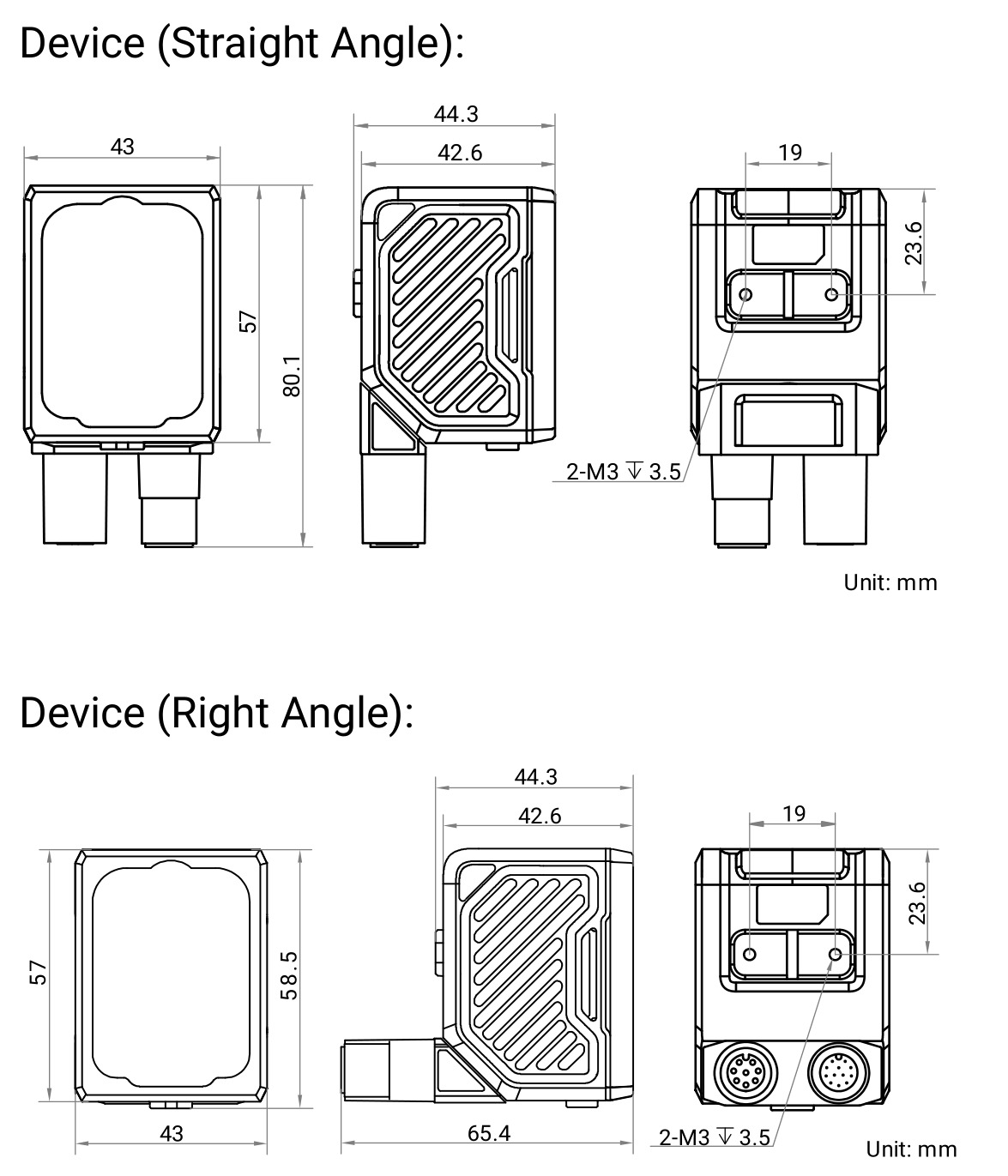
The body is metal and its front face measures 43 mm wide by 57 mm high. It is built in two cable directions: the straight-angle version is 80.1 × 43 × 44.3 mm and the right-angle version 58.5 × 43 × 65.4 mm, both weighing approximately 195 g. The dimension drawing shows two M3 mounting holes counterbored to 3.5 mm depth, and the rotatable cable design lets the connector be turned to clear a bracket or a guard.
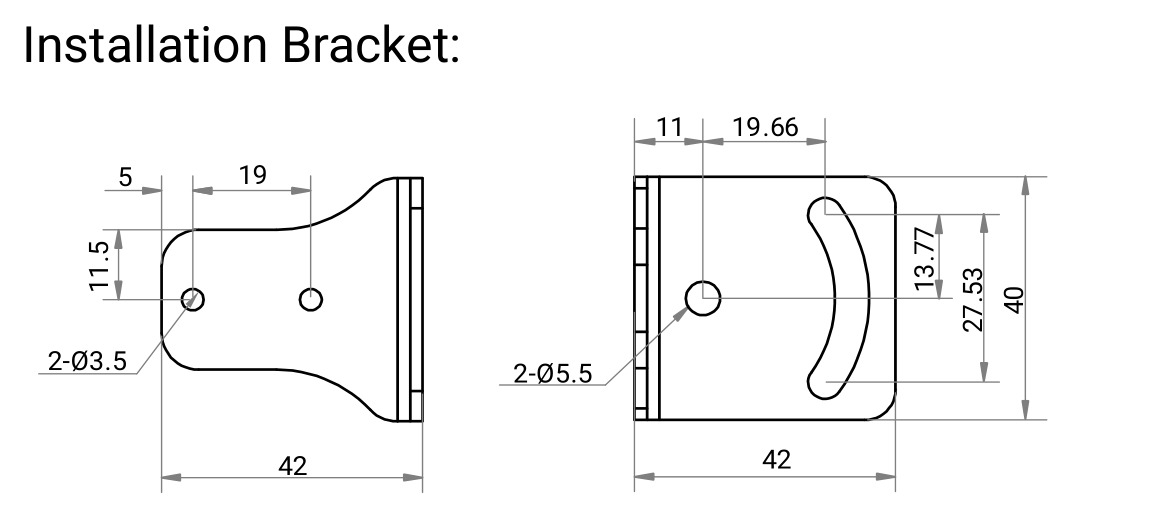
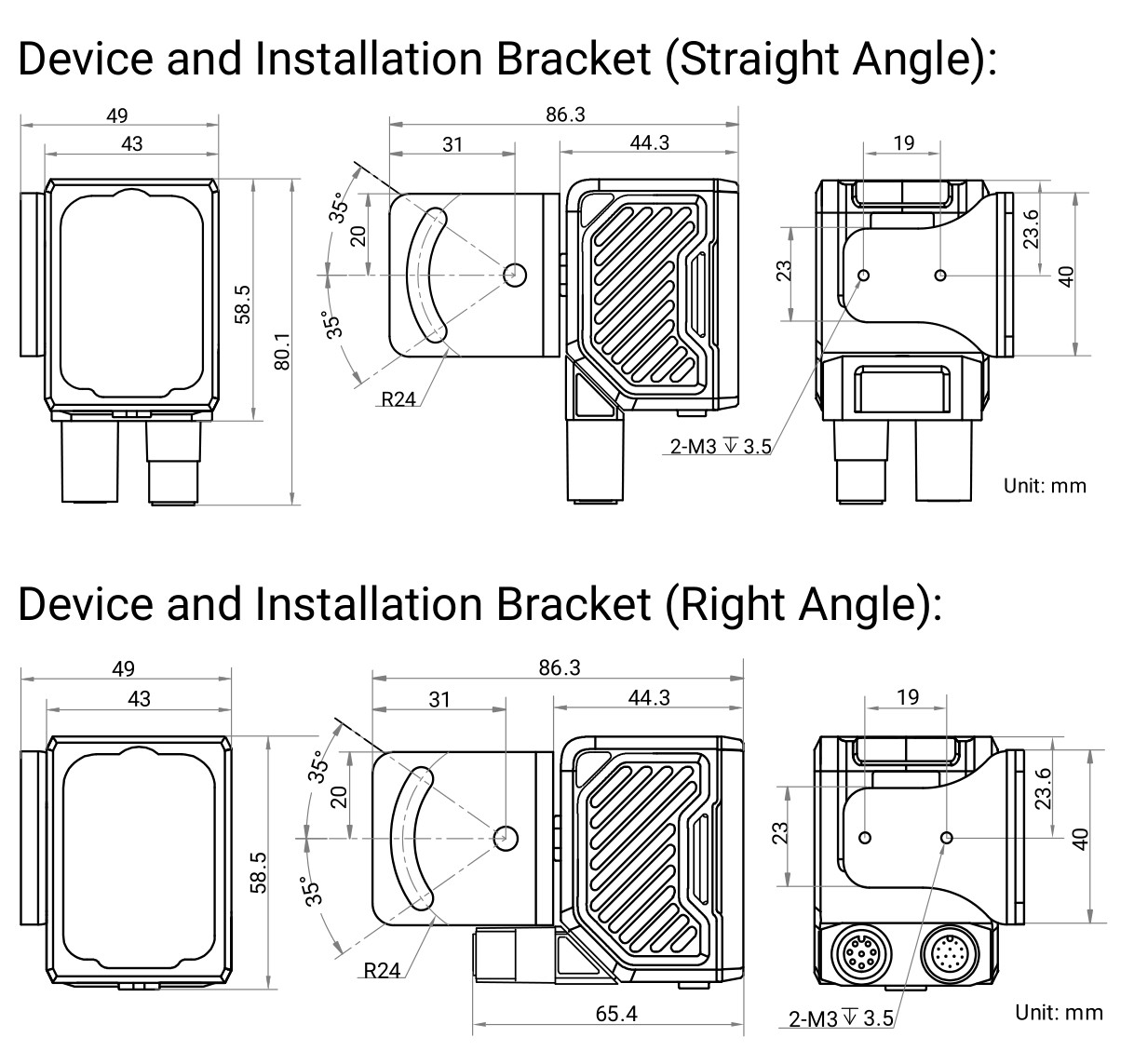
The optional installation bracket is a 42 mm × 40 mm plate: two Ø3.5 mm holes at 19 mm centres on one face and two Ø5.5 mm holes at 19.66 mm centres on the other. In the combined device-and-bracket drawing the reader is fastened through a curved slot of R24 radius that swings 35 degrees either side of centre, so its angle is set at the mount rather than by a machined part; the bracket plus reader measures 86.3 mm across.
The reader is rated IP67 once the waterproof lens cap is correctly installed, which covers dust ingress and the water jets a washdown line produces. It runs from 0 °C to 50 °C on the mechanical-focus models and 0 °C to 45 °C on the liquid-lens models, stores from –30 °C to 70 °C, and tolerates 20% RH to 95% RH with no condensation.
For motion duty the datasheet gives two tested figures rather than a marketing claim: vibration resistance from 10 Hz to 55 Hz at 1.5 mm full amplitude for 2 hours on each of the X, Y and Z axes to IEC 60068-2-6, and shock resistance of 30 g at 11 ms half-sine for 500 shocks per axis in 6 directions to IEC 60068-2-27. Both are measured on the device alone, so the bracket and the arm are yours to rate.
The EDX-3009 is applied in consumer electronics, lithium battery, tobacco, medicine, photovoltaics, automobile and PCB production. Those are all cases where the code is small, the surface is reflective, or the label is printed and verified in the same station. At a print-and-apply head it confirms the label that was just produced; at a cell or PCB conveyor it reads a direct-part-marked code that never leaves the line; at a changeover-heavy assembly station the liquid-lens model keeps focus as the product height moves.
Related hardware on this site: ED-5009 5 MP smart code reader for Gigabit Ethernet installations, E130 fixed mount scanner, ED3000 for fast moving Data Matrix and ED-2004-EX05 fixed mount scanner. Browse the full industrial intelligence range or the fixed-mount barcode scanners category, and see how we test a reader on your own codes before you commit to a quantity.
Questions about this model - quantity, customization, documents. Leave your contact details below.
About

Products
Solutions
Support
News