+86-18050089566(WhatsApp/wechat)


Time:2026-10-17 Views:0
A ring scanner cost is ten separable lines: radio and mode set, engine class, screen or none, the cell and its chemistry, sizing kit and straps, firmware symbology set, SDK or wedge output, housing and branding, certification scope, packaging. Two units that photograph alike differ because those lines differ, and an OEM order moves several onto your purchase order.
In short:
Bluetooth HID mode, SPP mode, BLE mode beside a 2.4G receiver … transmission distance up to 100m; the R42 prints Connectivity : Bluetooth 3.0+4.2, 2.4G Wireless, USB.OS: Android 14.0.180mAh detachable cell on AI1510 to 500mAh on the R42 and 2300mAH on the AI1580.No price, range or saving is stated here: the figures are commercial terms and parameter rows published by EDOO on edoo-iot.com, October 2026, to confirm at order time. The handheld bill-of-materials argument belongs to what drives barcode scanner price; this article reads that structure for the wearable family and for an OEM order.
Ten lines recur, each with an observable cause. Radio and mode set: how many links the device carries. Engine class: sensor, decoder, illumination. Display: screen or none. Power: capacity, chemistry, detachable cell or dock. Wear hardware: ring bodies per digit size, straps, sleeves, a wrist mount. Firmware scope: which symbologies ship enabled. Output path: an SDK your developers write against, or keyboard-wedge characters into the focused field. Housing and branding: tooling, logos, artwork. Certification scope: which marks cover which variant. Packaging: the retail box, the carton count, the shipped mass. Require them as named lines: a bundled figure cannot be re-compared when you reorder, change a radio variant or move from a catalog unit to your own brand.
Every link is silicon, an antenna, a tuned radiated path and a test report. The R41-21 prints four data paths on one page — three Bluetooth modes plus a 2.4G receiver, to connect with the device and information-receiving host and a USB data cable — and its range lines, up to 100m for the receiver and up to 50m for Bluetooth, are antenna and power-class decisions. The R43 prints 3.0+4.2 Bt transmission, and the AI1580 block prints Communication: WIFI, Bluetooth 5.0 inside what the same block describes as an eight-core ARM Cortex-A76 with 64GB ROM + 4GB RAM: a computer that scans.
Two consequences follow: a device that is its own host brings display, memory, operating system and application support into the same line, and buffering is hardware too — the R41-21 prints Max storage 130000 pieces of 13 bits commodity code, memory a store-and-forward fleet relies on when the link drops.
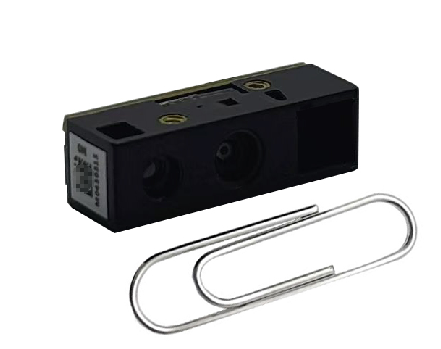
Three costs sit in the decode head: sensor, processing and illumination. The R42 prints Processor : Dual-CPU architecture for parallel image processing with a 640480(optional 1280 960) sensor; the R41-21 prints 640*480 CMOS with Illumination LED with white light, its own fifth-generation decoding stack and a laser aimer; the AI1520 names its engine component, Scan Engine | EDOO M1, the module class listed in the scan engine range. An aiming laser, a second illumination channel or a finer sensor each add a component, a driver and a calibration step, so a ring printing only CMOS and one printing a named engine with an aimer are not the same head.
Yes, and it is a build change rather than an option. A display adds the panel and its driver, a backlight drawing on the same small cell, glass or lens in front of it, and sealing work around that opening — which is why a screen and a stated IP code (the IEC 60529 enclosure rating) are two lines to check together. The AI1520 is titled a ring scanner "With Screen" and described as having a built-in display; the R42 prints Prompt method | Sound, LED, and vibration and the R41-21 prints Notification | Beeper, LED. The screen buys confirmation without a host glance.
Capacity is mass, volume and a shipping classification. Published cells here run from 180mAh pure cobalt high-density battery, detachable on AI1510 — a page that publishes no run time — through 195mAH lithium, continue working time 8-10 h on the AI1520 and 3.7V 500mAh rechargeable Li-ion battery on the R42, which also prints 14hrs of continuous use and 2hrs charging, to Battery: 2300mAH large capacity and Battery Life: 14 hours continuous use on the AI1580. The R41-21 prints no cell at all, only Operating voltage 5VDC±5%, 210mA run and 70mA standby: a device powered from its dock or cable.
Three order consequences: a detachable cell is a second consumable line with its own contacts and charger; more capacity raises shipped mass and the transport classification scope; and the charging hardware a fleet needs follows the architecture printed on the page — a base and a communication charging gateway on AI1510, a Power supply adapter line on the R42.
A wearable sold in sizes is several stock units, not one. Each digit size is its own SKU with its own carton, its own label and, if you brand it, its own artwork plate — five sizes are five order lines on identical electronics. Straps and sleeves are consumables you order with a replacement quantity attached, and the pages here publish a single-unit order floor: Minimum Order Quantity | 1 pcs on the R43 and the AI1520.
Packaging is freight arithmetic. The R43 prints Package | 10 x 8 x 2.5 cm with Gross Weight | 0.326 kg; the AI1520 prints 10.6 x 9.5 x 6.3 cm and 0.18 kg. Box volume sets units per carton and per pallet, and freight is calculated on shipped mass, so an oversized retail box is paid for on every shipment; accessory and packaging part numbers belong on the same sheet as the device.
The output path splits labor between you and the supplier. A keyboard wedge needs no code — the ring types into the focused field — and the work lands in your deployment discipline instead; mode selection is a pairing-layer question. An SDK path puts work in your developers' hands and an obligation on the supplier: the R43 and AI1520 pages both print SDK Provided : Yes, a stated deliverable to pin down in writing — which hosts it builds against, and what support looks like after the first year.
The service lines are the other half of that sheet. Both pages print Warranty | 1-Year and Return and Replacement, Others, Repair, Free Spare Parts, Call Center and on-line Technical Support. A spare-parts line means stock and turnaround; a call-center line means hours and languages. Both are commitments, so ask which apply to a custom run rather than to the catalog unit.
In a catalog purchase, one-off costs are spread across whatever the seller sells. In an OEM or ODM order you buy them directly: tooling for a housing or logo plate, firmware written to your symbology enable list and prefix rules, packaging artwork, and the certification work a radio or enclosure change reopens. The quote splits into a unit line and a non-recurring line — the split that makes a second order comparable to the first.
EDOO's published terms frame the scale: an OEM and ODM program with quantities from 100 units, 15-day samples and 30-day mass production, made in a Shenzhen facility listed at 5000+ square meters under ISO9001 with BSCI social compliance, shipping to 60+ countries. The marks published on the site are CE, FCC and RoHS; a new radio variant or enclosure reopens that scope, so ask which certificate covers which SKU and revision rather than accepting a logo on the box. Fix your label set and acceptance checks before the sample ships; the wearable category page lists the published rows to write them from.
Lithium cells move under a documentation chain, and a buyer should be handed papers rather than a reassurance. The cell or pack model is tested to UN38.3 — the UN Manual of Tests and Criteria's requirements for lithium cells and batteries — and the result is a UN38.3 test summary naming that model, the laboratory and the revision tested, not the device brand. Air movement then falls under the IATA Dangerous Goods Regulations, which set the classification, the packing instruction and quantity limits, the carton marks and labels, the paperwork filed with it, and a state-of-charge limit for cells shipped on their own; cells installed in equipment fall under a different classification.
Ask for four things before you book freight: the UN38.3 test summary for the exact cell part number in your build, the declaration template your forwarder will file, the classification and packing instruction the seller intends to ship under, and a written answer on whether cells travel inside the rings or beside them. Conformity marks and customs entry are a separate list, covered by the importer's checklist for CE, FCC and RoHS. This describes the mechanism and the documents; it claims no certification for EDOO beyond the CE, FCC and RoHS marks published on the site.
| Quote line | What makes it move | What to ask for, and what it decides |
|---|---|---|
| Radio and mode set | Chips, antennas and test scope per link (HID, SPP, BLE, 2.4G, Wi-Fi) | The mode list per SKU — how many links you can commission |
| Engine class | Sensor, decode processing, illumination, aiming components | Which engine is fitted and what firmware enables — your label coverage |
| Display and confirmation | Panel, driver, backlight load, sealing around the opening | Screen or beep-and-LED per SKU — confirmation without a host glance |
| Cell and charging | Capacity, chemistry, detachable cell, dock or gateway | Cell part number and charger lines — the power build and its transport scope |
| Sizing kit, straps, packaging | One SKU per size; box volume, carton count, gross weight | Sizes stocked and packed dimensions — the consumable pool and shipped mass |
| SDK versus wedge | Supplier hours behind an SDK, your hours behind a wedge | SDK Provided : Yes scope and support term — who writes code |
| Branding, certification, terms | Tooling, artwork, per-variant scope; MOQ 100, 15-day sample, 30-day production | NRE mapped to SKUs and certificates — what a reorder re-tests, in writing |
What drives the cost of a ring scanner when two units look alike? The lines a photo cannot show: how many radios and modes the device carries, the sensor and decode processing behind the window, whether there is a screen, the cell and its charging architecture, how many sizes you must stock, what the firmware enables, and whether an SDK or only a wedge is provided.
What is the minimum order for an OEM wearable scanner? EDOO publishes OEM quantities from 100 units, a 15-day sample lead time and 30-day mass production, from a Shenzhen facility listed at 5000+ square meters under ISO9001 with BSCI. Catalog pages in this family separately print Minimum Order Quantity | 1 pcs for a single evaluation unit.
Does a wearable scanner with a display change what you buy? It changes the build: a panel, a driver, extra load on the same cell, and sealing around the opening. The AI1520 is titled a ring scanner "With Screen"; the R42 and R41-21 pages print sound, LED, beeper and vibration instead, a simpler device and a simpler order.
What paperwork should arrive with a lithium-battery shipment? A UN38.3 test summary naming the exact cell or pack model and the laboratory, the classification and packing instruction the consignment ships under per the IATA Dangerous Goods Regulations, the forwarder's declaration, and a written answer on whether cells travel inside the devices or beside them.
R41-21 product page · EDOO product datasheet · EDOO product datasheet · EDOO product datasheet · Solution/328.html · Barcode scan engines · ODM / OEM services · huanxingtiaomasaomiaoqi · services/313.html
About

Products
Solutions
Support
News